
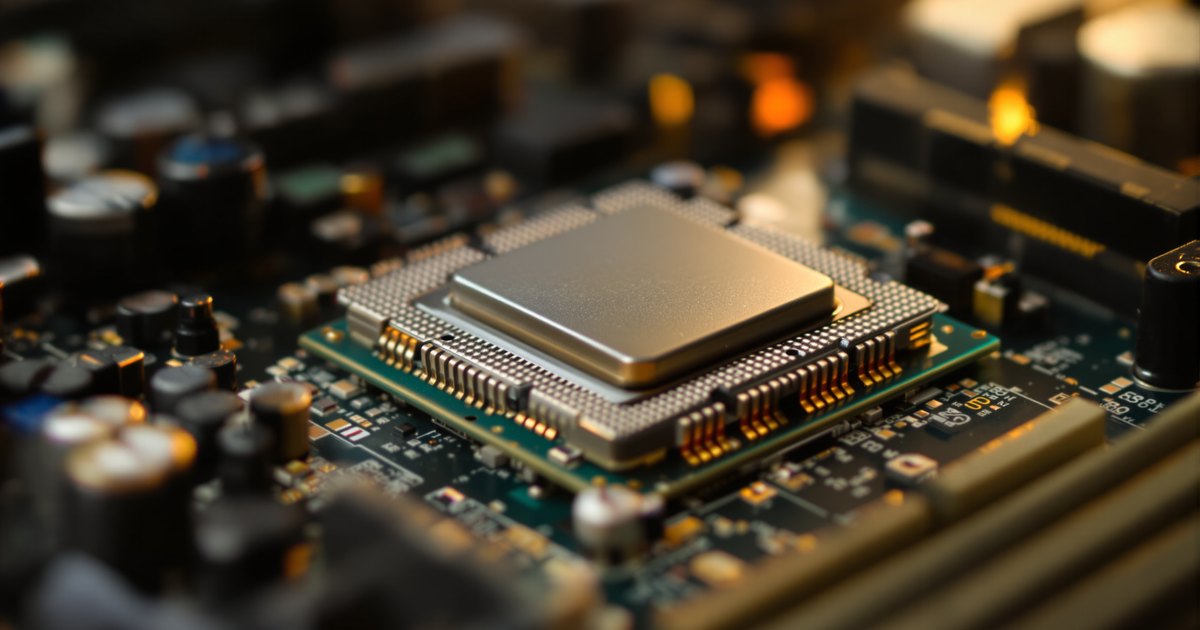
The processor's integrated memory controller (IMC) sets the ceiling for any memory overclock. It drives every signal to the modules, and its ability to hold high speeds varies from chip to chip, by processor generation, and by how many modules and ranks it has to drive. Two identical kits can overclock differently in two identical systems because of the CPU, not the RAM. Server processors avoid the question entirely: their controllers run ECC memory at validated speeds.
What the memory controller does
The controller turns the processor's requests into memory commands, moves data across each channel and enforces timings. On modern Intel and AMD processors it sits on the CPU itself. See what is a memory controller for the basics.
How it limits overclocking
| Factor | Effect on overclocking |
|---|---|
| Chip-to-chip variation | Some processors hold higher memory speeds than others of the same model |
| Processor generation | Newer controllers generally support higher speeds |
| Modules and ranks per channel | More load lowers the stable speed. See does RAM capacity affect overclocking |
| Controller clock ratio | Running in step with memory lowers latency; higher speeds may need a slower ratio |
| Controller voltage | Affects stability at high speeds; set by the platform |
AMD and Intel: clock ratios
- AMD Ryzen 7000 and 9000: the controller clock (UCLK) can match the memory clock (MCLK) in 1:1 mode for lower latency. AMD has described DDR5-6000 as the sweet spot for Ryzen 7000. Faster speeds may need a 1:2 ratio, which can cost latency.
- Intel: Gear modes set the controller-to-memory ratio. Higher gears allow higher memory speeds at some latency cost.
A higher number on the box does not always mean better performance once the ratio changes. See how much DDR5 overclocking gains.
Servers: validated speed instead of tuning
Server processors are validated at a set memory speed for one and two modules per channel, and memory runs there. ECC memory corrects and reports errors, so the platform stays stable under constant load. See how your CPU limits memory speed and the ECC vs non-ECC guide.
For the full picture, see RAM overclocking explained.
Memory that runs at its rated speed
NEMIX RAM modules are JEDEC-compliant and run at standard speeds with no profile to enable. For servers and workstations, see DDR5 RDIMM, DDR4 RDIMM and LRDIMM, or start from data center server memory.
Frequently asked questions
What is the integrated memory controller (IMC)?
The part of the processor that talks to memory: it sends commands, moves data and sets timings. It sits on the CPU itself on modern Intel and AMD processors.
Why do two identical CPUs overclock memory differently?
Chip-to-chip variation. Memory controllers differ slightly from chip to chip, so one processor may hold a higher memory speed than another of the same model.
What is 1:1 mode on AMD?
On Ryzen 7000 and 9000, the memory controller clock (UCLK) can run at the same rate as the memory clock (MCLK), which lowers latency. Above a certain speed it drops to a 1:2 ratio. AMD has described DDR5-6000 as the sweet spot for Ryzen 7000.
What are Gear modes on Intel?
Gear modes set the ratio between the memory controller and the memory clock. Higher gears allow higher memory speeds at some latency cost.
Does the memory controller limit server memory speed too?
Yes, by design. Each server processor is validated at a set memory speed, and memory runs at that speed. See how your CPU limits memory speed.
Buying for more than one system
IT teams and integrators that maintain servers and workstations can standardize on one kit per model. Request a quote with your models and quantities, or send us your system model and we will confirm the right module before you order.
Steps and rules are summarized from the vendors' published documentation; follow the guide for your exact model.