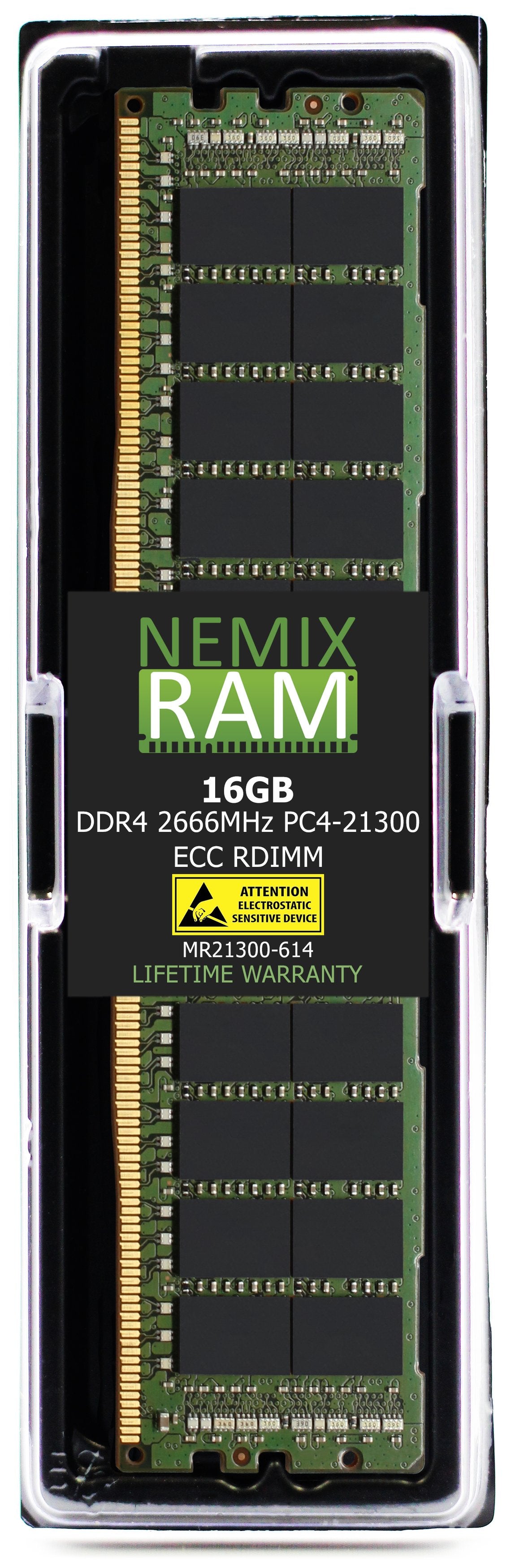
Micron Memory Part Number Cross-Reference
169 products
Showing 169 - 169 of 169 products
Micron Memory Cross-Reference
Micron is one of only three companies left that actually manufacture DRAM, the silicon inside most server memory on the market, including a good deal of what ships under other brands. If you have a Micron part number in hand, find its match here.
How to read a Micron part number
MTA  18   ASF  2G72  PZ   -3G2
 │   │     │    │     │     │
 │   │     │    │     │     └─ speed grade
 │   │     │    │     └─────── module type
 │   │     │    └───────────── density × bus width
 │   │     └────────────────── product family
 │   └──────────────────────── DRAM device count
 └──────────────────────────── MTA = DDR4 · MTC = DDR5
Generation — MTA… is DDR4, MTC… is DDR5. That's the fastest way to tell them apart.
Device count tells you ECC. A count divisible by 9 — MTA9, MTA18, MTA36, MTA72, MTA144 — is a 72-bit ECC module. MTA8 and MTA16 are 64-bit non-ECC.
Module type
| Suffix | Type |
|---|---|
PZ · PDZ · PSZ
|
ECC Registered — RDIMM |
LSZ |
ECC Load-Reduced — LRDIMM |
AZ |
Unbuffered DIMM |
HZ |
SODIMM |
Speed grade — the code after the dash:
| Code | Speed | Code | Speed | |
|---|---|---|---|---|
-2G1 |
DDR4-2133 |
-2G9 / -2S9
|
DDR4-2933 | |
-2G3 |
DDR4-2400 | -3G2 |
DDR4-3200 | |
-2G6 / -2S6
|
DDR4-2666 |
A trailing E1, R1 or F1 is a revision marker — MTA18ASF2G72PZ-3G2 and -3G2E1 are the same speed and interchange.
What we stock against Micron parts: ECC Registered RDIMM, Load-Reduced LRDIMM, ECC UDIMM and ECC SODIMM, DDR4 2133 through 3200 and DDR5 4800 through 6400, in densities from 8GB to 256GB.
Have the part number but not the machine? Search it directly — MTA18ASF2G72PZ-3G2, MTC20F2085S1R — and we'll show the match. Contact our team for volume, reseller or purchase-order pricing.
Capacity and rank from a DDR4 number
The density × bus-width block and the device count together fix capacity and rank, which is what the memory controller checks. The table covers every DDR4 Micron code on this page.
| Density code | Capacity | Device count → rank | Examples |
|---|---|---|---|
| 1G72 | 8GB ECC | MTA9 = 1Rx8 · MTA18 = 2Rx8 or 1Rx4 | MTA9ASF1G72PZ · MTA18ASF1G72PZ |
| 2G72 | 16GB ECC | MTA9 = 1Rx8 (16Gb die) · MTA18 = 2Rx8 (PDZ) or 1Rx4 (PZ) | MTA9ASF2G72PZ-3G2 · MTA18ASF2G72PDZ-3G2 · MTA18ASF2G72PZ-2G6 |
| 4G72 | 32GB ECC | MTA18 = 2Rx8 (16Gb die) · MTA36 = 2Rx4 | MTA18ASF4G72PDZ-3G2 · MTA36ASF4G72PZ-3G2 |
| 8G72 | 64GB ECC | MTA36 = 2Rx4 (16Gb die) · MTA72 = 4Rx4 LRDIMM | MTA36ASF8G72PZ-3G2 · MTA72ASS8G72LZ-2G9 |
| 16G72 | 128GB ECC | MTA72 = 4Rx4 LRDIMM · MTA144 = 8Rx4 3DS LRDIMM | MTA72ASS16G72LZ-3G2 · MTA144ASQ16G72LSZ |
| 1G64 · 2G64 · 4G64 | 8GB · 16GB · 32GB non-ECC | MTA8 = 1Rx8 · MTA16 = 2Rx8 | MTA8ATF1G64AZ-3G2 · MTA16ATF2G64HZ-3G2 (SODIMM) |
The letters between the density code and the type suffix (ASF, ADF, ATF, ASS, AKF) identify the DRAM die generation and revision — not a fitment attribute. MTA18ASF2G72PDZ-3G2 and MTA18ADF2G72PDZ-3G2 are the same 16GB 2Rx8 DDR4-3200 RDIMM to the server.
How to read a DDR5 number
Micron changed the layout for DDR5, and one rule changes with it: DDR5 ECC modules are 80-bit, not 72, so the ECC device counts are multiples of 10 rather than 9.
MTC   20   F   2   08   5   S1   R   C48   BA1
 |     |   |   |    |   |    |   |    |     |
 |     |   |   |    |   |    |   |    |     └─ die / PCB revision  (BA1, BR1, BB1) — interchangeable
 |     |   |   |    |   |    |   |    └─────── speed grade  (C48 = DDR5-4800, C56 = 5600, C64 = 6400)
 |     |   |   |    |   |    |   └──────────── module type  (R = RDIMM, E = ECC UDIMM, U = non-ECC UDIMM, S = SODIMM)
 |     |   |   |    |   |    └──────────────── package / temperature grade
 |     |   |   |    |   └───────────────────── DRAM die density  (5 = 16Gb, 6 = 24Gb)
 |     |   |   |    └───────────────────────── DRAM width  (04 = x4, 08 = x8)
 |     |   |   └────────────────────────────── ranks  (1 or 2)
 |     |   └────────────────────────────────── product family
 |     └────────────────────────────────────── DRAM device count  (10 / 20 / 40 = ECC 80-bit · 8 / 16 = non-ECC 64-bit)
 └──────────────────────────────────────────── MTC = DDR5
| DDR5 number | Module | Device count check |
|---|---|---|
| MTC10F1084S1RC48 | 16GB 1Rx8 ECC RDIMM, 4800 | 10 devices = 1 rank × 10 x8 chips |
| MTC20F2085S1RC48 | 32GB 2Rx8 ECC RDIMM, 4800 | 20 = 2 ranks × 10 x8 |
| MTC20F1045S1RC56 | 32GB 1Rx4 ECC RDIMM, 5600 | 20 = 1 rank × 20 x4 |
| MTC40F2046S1RC48 | 64GB 2Rx4 ECC RDIMM, 4800 | 40 = 2 ranks × 20 x4 |
| MTC40F204WS1RC56 | 96GB 2Rx4 ECC RDIMM, 5600 (24Gb dies) | 40 = 2 × 20 x4; W = 24Gb density |
| MTC20C2085S1EC48 | 32GB 2Rx8 ECC UDIMM, 4800 | 20 devices, E = ECC unbuffered |
| MTC16C2085S1UC48 | 32GB 2Rx8 non-ECC UDIMM, 4800 | 16 devices = 64-bit, no ECC |
| MTC16C2085S1SC56 | 32GB 2Rx8 non-ECC SODIMM, 5600 | 16 devices, S = SODIMM |
Read the DDR5 string the same way you read DDR4: device count for ECC, ranks-width-density for organization, the type letter, then the speed. Everything after the speed is revision.
Crucial numbers are Micron numbers
Crucial is Micron's own brand, and a Crucial part is the same module as the MTA / MTC part it wraps. Crucial's format is shorter and reads left to right.
CT   32   G4   R   F   D   4   293
 |    |    |   |   |   |   |    |
 |    |    |   |   |   |   |    └─ speed  (293 = 2933, 266 = 2666, 320 = 3200, 213 = 2133)
 |    |    |   |   |   |   └────── DRAM width  (4 = x4, 8 = x8)
 |    |    |   |   |   └────────── ranks  (S = single, D = dual, Q = quad)
 |    |    |   |   └────────────── product family
 |    |    |   └────────────────── module type  (R = RDIMM · L = LRDIMM · W = ECC UDIMM · T = ECC SODIMM · D = non-ECC UDIMM · S = non-ECC SODIMM)
 |    |    └────────────────────── generation  (G4 = DDR4, G5 = DDR5)
 |    └─────────────────────────── capacity in GB
 └──────────────────────────────── Crucial
Examples: CT32G4RFD4293 = 32GB DDR4-2933 2Rx4 RDIMM (= MTA36ASF4G72PZ-2G9). CT16G4RFS8266 = 16GB DDR4-2666 1Rx8 RDIMM. CT64G4LFQ4266 = 64GB DDR4-2666 4Rx4 LRDIMM. CT16G4WFD8266 = 16GB DDR4-2666 2Rx8 ECC UDIMM. CT16G4TFD8266 = 16GB DDR4-2666 ECC SODIMM. DDR5 Crucial server parts follow the same letters with a CL code in place of the family letter: CT32G48C40R5 style. Search this page by either the Crucial or the Micron number.
Where you will see these numbers
- Under an OEM label — Dell, HPE, Lenovo, Cisco, and Supermicro all ship Micron-built modules. The OEM part number is on top and the MTA / MTC number is printed beneath it or on the DRAM chips themselves. Either finds the equivalent here.
- In the BMC / iDRAC / iLO / XCC inventory — a slot reporting manufacturer "Micron Technology" shows the MTA / MTC number as the part number. Match the body of the number when adding to an existing set.
- In a board's QVL — Supermicro's MEM-DR…-ML… and -CL… revisions are Micron and Crucial builds; ASUS, ASRock Rack, and Gigabyte QVLs cite Micron numbers directly.
- In a quote or configurator BOM — resellers frequently quote Micron or Crucial numbers rather than OEM ones. Paste the line items into a quote request and we return a matched set.
What "compatible equivalent" means here
A NEMIX RAM module listed against a Micron or Crucial number matches it on every attribute the memory controller checks: DDR generation, capacity, ECC, buffering (registered, load-reduced, or unbuffered), rated speed, rank organization and DRAM width, voltage, and pin count. It is built on DRAM from Micron, Samsung, or SK hynix to that specification and tested in the platform class it is listed for before listing. Server firmware reads the SPD, not the maker's part number; a matched module is the same part to the controller. Mixing NEMIX RAM with Micron modules of the same spec in one system is supported. Every module carries a lifetime replacement warranty with free US-based technical support.
Ordering for fleets
NEMIX RAM is a registered federal supplier (UEI GV8MMYNDJ5J1, CAGE 59AB2) and accepts purchase orders with net terms for business, government, and education buyers. Send a BOM in Micron or Crucial numbers with node count, or a BMC inventory export, and we return the full set matched and shipped together. Volume and reseller pricing is available on request.
Frequently asked
My number's family letters or revision suffix aren't on the listing. If generation, device count, density code, type, and speed match, it is the same module; the family letters and E1 / R1 / BA1 tails are Micron's die tracking. If the body does not match anything, send us the number and we will match it.
MTA18ASF2G72PZ or MTA18ASF2G72PDZ — same thing? Same capacity and speed, different organization: PZ is 1Rx4, PDZ is 2Rx8. Both work in most servers, but match what is installed; mixing x4 and x8 in one channel is not recommended.
Why is my DDR5 ECC module MTC20 when DDR4 ECC was MTA18? DDR5 ECC RDIMMs are 80 bits wide (two 40-bit sub-channels), so a 2Rx8 module has 20 chips instead of 18. Divisible by 10 is the DDR5 ECC test; divisible by 9 is the DDR4 one.
Is a Crucial CT part the same as the Micron MTA part? Yes. Crucial is Micron's retail brand; the module inside is the same, and both numbers cross-reference to the same NEMIX RAM listing.
-3G2 or -2G9 for my 2nd Gen Xeon? -2G9 (2933) is what the CPU runs. -3G2 (3200) fits and runs at 2933; buy it only if the module will move to a 3200 platform later.
NEMIX RAM can deliver any Configuration your Fleet Requires
Speak to a Sales Representative