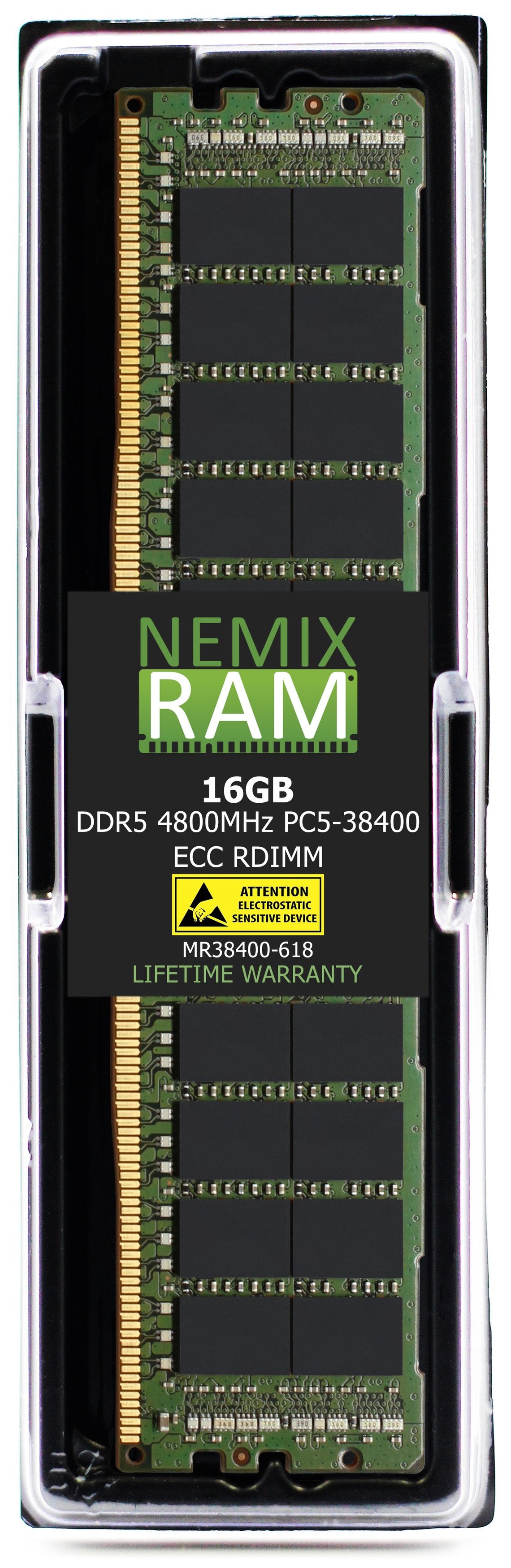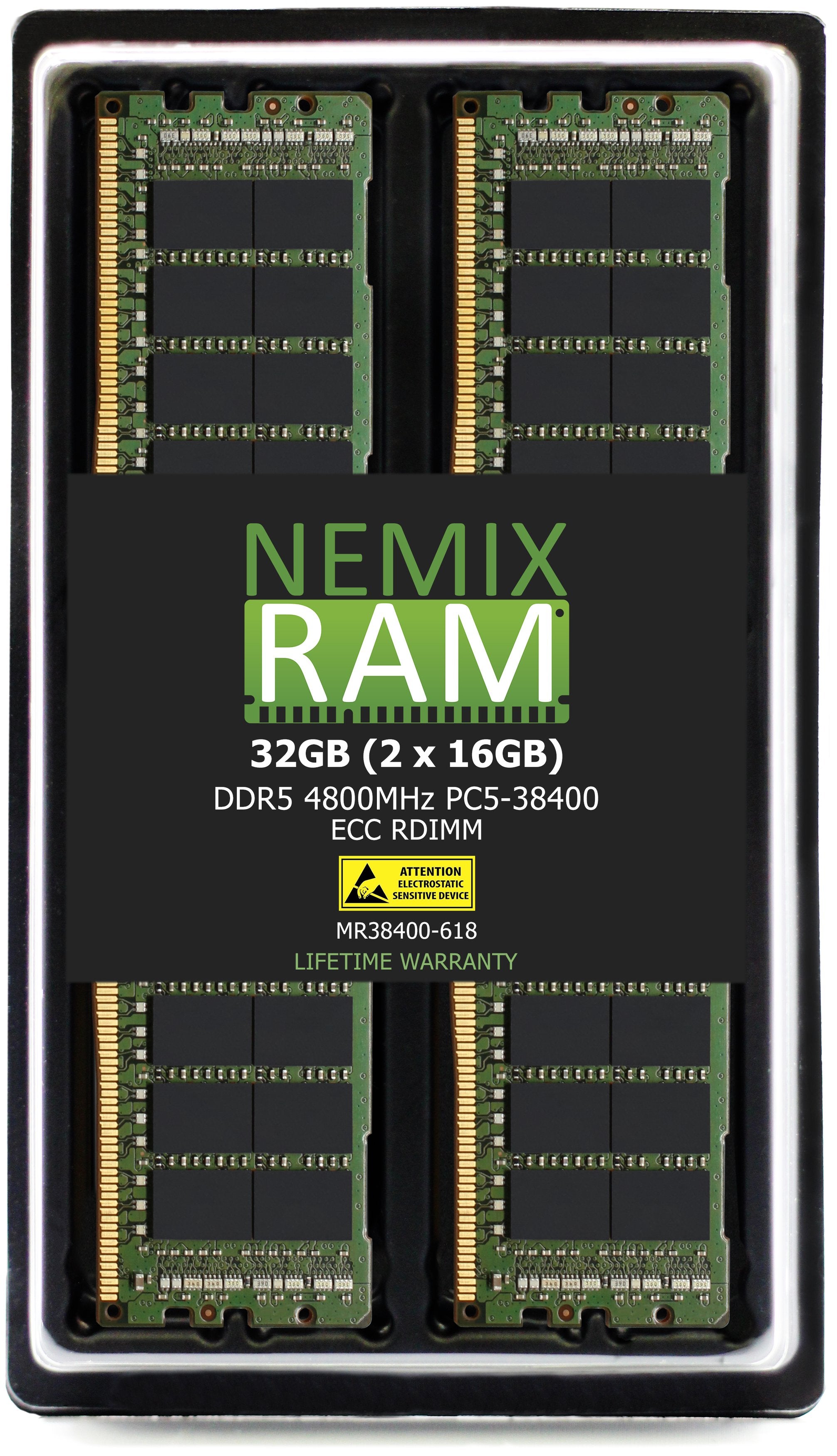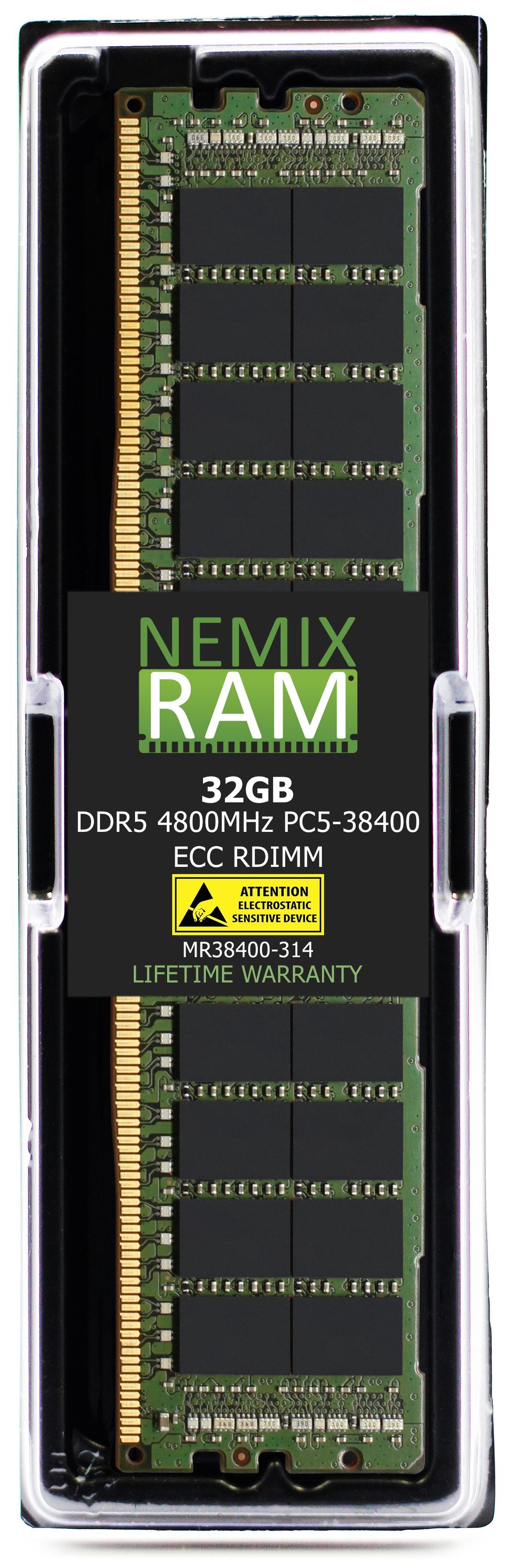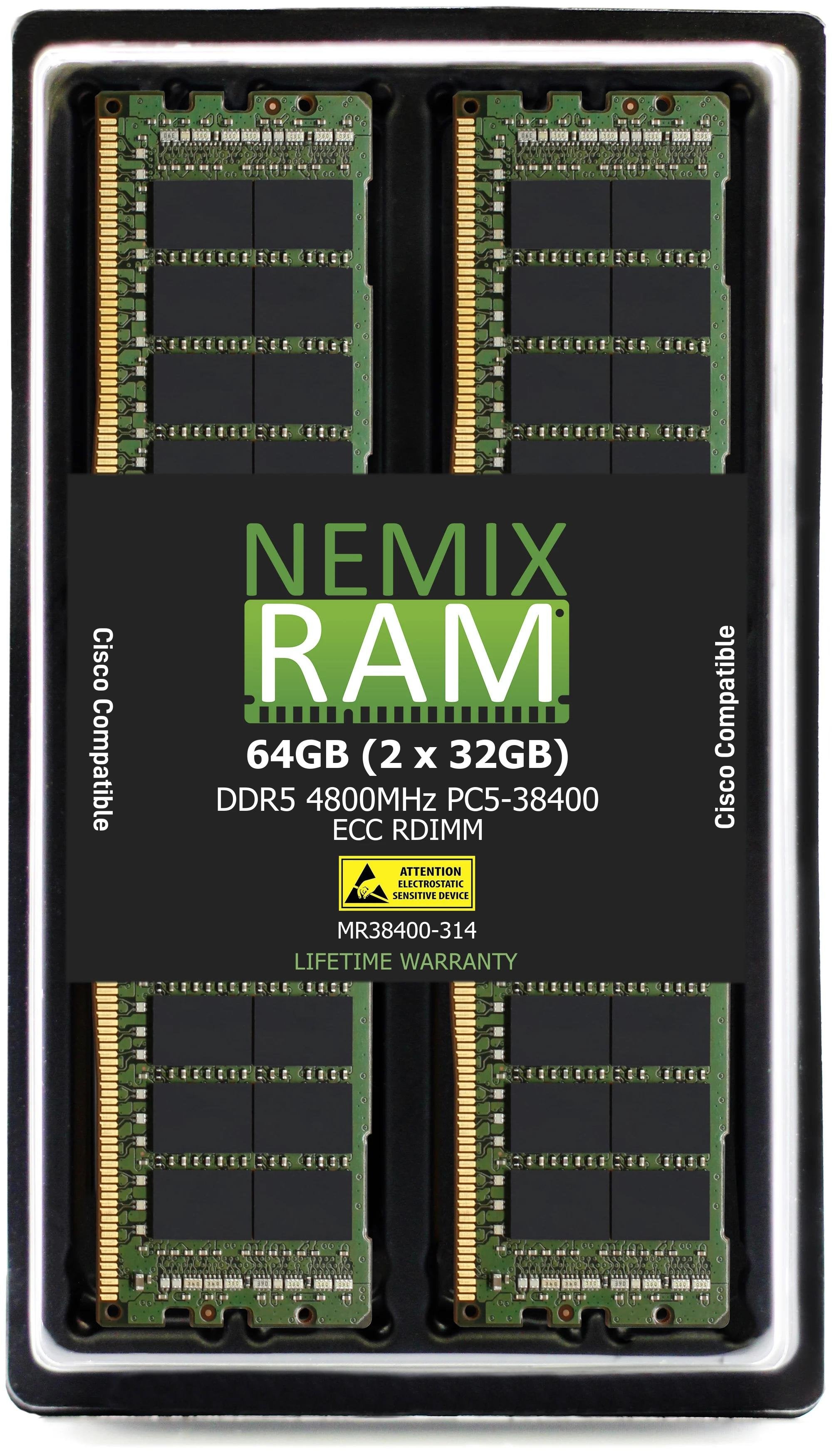
ASUS | ROG | TUF | STRIX | PRO WS | MAXIMUS | MOTHERBOARD | WRX90 | WRX80 | TRX50 | CHIPSET | MEMORY UPGRADES
106 products
Showing 97 - 106 of 106 products
Board-matched memory for ASUS motherboards — 111 boards covered across gaming, workstation and server lines.
ROG and ROG Strix, TUF Gaming and Prime desktop boards on Z890, Z790, X870, X670, B850 and B650 chipsets take non-ECC UDIMM, and this is where the speed lives — DDR5-5600 across most of the current range.
Pro WS and WS workstation boards on W790, W680 and C621 take ECC UDIMM or ECC RDIMM depending on the board, and the RS-series rack servers take registered memory. Same brand, entirely different module — a Pro WS board will not run the memory from a ROG build.
DDR5, DDR4 held for the Z790 and X670-era boards still in service. Densities run 8GB to 256GB per module.
ASUS publishes a QVL per board, and a module that isn't on it will often still run — but at a lower speed, or with the XMP profile refusing to load. Use Shop by System Model to filter to your exact board and see only modules matched to it, or send us the board model and we'll confirm before you order.
Lifetime warranty on every module. Purchase orders, net terms and volume pricing for business, government and education buyers.
Memory by ASUS board family
ASUS names encode the line and the chipset, and between them they tell you the module type. ROG, ROG Strix, TUF Gaming, Prime, and ProArt are desktop lines on consumer sockets. Pro WS and WS are workstation lines that span both unbuffered and registered sockets. RS, ESC, and RS-series servers are registered platforms with a BMC. Match the row, then confirm on the board's spec page.
| Board family | Examples | Platform | Memory |
|---|---|---|---|
| Pro WS WRX90 / TRX50 | Pro WS WRX90E-SAGE SE, Pro WS TRX50-SAGE WIFI | Threadripper PRO 7000 WX (WRX90) · Threadripper 7000 (TRX50) | DDR5-5200 ECC RDIMM (runs 4800 modules at 4800) · 8 channels / 8 slots (WRX90) · 4 channels / 4 slots (TRX50) · registered only |
| Pro WS WRX80 | Pro WS WRX80E-SAGE SE WIFI, Pro WS WRX80E-SAGE SE WIFI II | Threadripper PRO 3000 / 5000 WX | DDR4-3200 ECC RDIMM · 8 channels / 8 slots · registered only |
| Pro WS W790 | Pro WS W790E-SAGE SE, Pro WS W790-ACE | Xeon W-3400 / W-2400 | DDR5-4800 ECC RDIMM · 8 channels (W-3400) or 4 (W-2400) · registered only |
| Pro WS C621 / C422 / C621E SAGE | Pro WS C621-64L SAGE, WS C621E SAGE, Pro WS C621-64L SAGE/10G, WS C422 SAGE/10G | 1st / 2nd Gen Xeon Scalable (C621) · Xeon W-2100 / W-2200 (C422) | DDR4-2666 / 2933 ECC RDIMM or LRDIMM · 6 channels per socket (C621), 4 (C422) · registered only |
| Pro WS W680 / W480 / C246 | Pro WS W680-ACE, Pro WS W680-ACE IPMI, Pro WS W680M-ACE SE, Pro WS W480-ACE, WS C246 PRO | 12th–14th Gen Core / Xeon E-2400 (W680) · Xeon W-1200 (W480) · Xeon E-2100 / E-2200 (C246) | DDR5-4800 / 5600 ECC UDIMM (W680) · DDR4-2933 ECC UDIMM (W480) · DDR4-2666 ECC UDIMM (C246) · 2 channels, 4 slots · unbuffered only |
| Pro WS AMD | Pro WS 665-ACE, Pro WS X570-ACE | Ryzen 7000 / 9000, EPYC 4004 (AM5) · Ryzen 3000 / 5000 (AM4) | DDR5-5600 ECC UDIMM (665-ACE) · DDR4-3200 ECC UDIMM (X570-ACE) · 2 channels, 4 slots |
| ProArt | ProArt X870E-Creator WiFi, ProArt X670E-Creator WiFi, ProArt B650-Creator, ProArt Z890-Creator WiFi, ProArt Z790-Creator WiFi | Ryzen 7000 / 9000 (AMD boards) · Core Ultra 200S / 12th–14th Gen (Intel boards) | DDR5-5600 ECC or non-ECC UDIMM on the AMD boards · DDR5-5600 / 6400 non-ECC UDIMM on the Intel boards · 4 slots |
| ROG / ROG Strix / TUF / Prime — AMD | ROG Crosshair X870E Hero, ROG Strix X870-A, TUF Gaming B850-Plus, ROG Strix B650E-F, Prime B650M-A, ROG Crosshair VIII Hero (X570), TUF Gaming X570-Plus | Ryzen 7000 / 9000 (AM5) · Ryzen 3000 / 5000 (AM4) | DDR5-5600 UDIMM (AM5) · DDR4-3200 UDIMM (AM4) · ECC UDIMM supported on most ASUS AMD boards, runs as ECC only with a supporting CPU · 4 slots |
| ROG / ROG Strix / TUF / Prime — Intel | ROG Maximus Z890 Hero, ROG Strix Z890-E, TUF Gaming B860-Plus, ROG Strix Z790-E, TUF Gaming Z790-Plus D4, Prime B760M-A, ROG Strix Z690-A | Core Ultra 200S (Z890 / B860) · 12th–14th Gen Core (Z790 / B760 / Z690) | DDR5-6400 UDIMM or CUDIMM (Z890 / B860) · DDR5-5600 UDIMM (Z790 / B760 / Z690 DDR5) · DDR4-3200 UDIMM on the "D4" boards · non-ECC · 4 slots |
| RS / ESC servers | RS700-E12, RS720-E12, RS700A-E13, RS720A-E13, RS700-E11, RS720A-E12, RS700-E10, RS700A-E11, RS500-E9, RS300-E12, RS300-E11, ESC8000A-E13, ESC4000-E11 | Xeon 6 (E12 Intel) · EPYC 9005 (A-E13) · 4th/5th Gen Xeon (E11) · EPYC 9004 (A-E12) · 3rd Gen Xeon (E10) · EPYC 7003 (A-E11) · 1st/2nd Gen Xeon (E9) · Xeon E-2400 / E-2300 (RS300) | DDR5-6400 RDIMM (E12 / A-E13) · DDR5-4800 / 5600 RDIMM (E11 / A-E12) · DDR4-3200 RDIMM / LRDIMM (E10 / A-E11) · DDR4-2666 / 2933 RDIMM / LRDIMM (E9) · DDR5-4800 or DDR4-3200 ECC UDIMM (RS300-E12 / E11) |
| Mini PCs | ASUS NUC 14 Pro, NUC 13 Pro, ExpertCenter PN64 / PN53 / PN52, PN42 | Core mobile · Ryzen mobile · N-series | DDR5-5600 non-ECC SODIMM (NUC 14, PN64, PN53) · DDR4-3200 non-ECC SODIMM (PN52 and older) · 2 slots |
Board lists are representative. The board's spec page and memory QVL are the authority; use Shop by System Model to filter to your board.
The 60-second module-type check
Three questions from the board name. Socket: sTR5, sWRX8, LGA 4677, LGA 3647, LGA 2066 (C422) and the RS/ESC servers are registered — RDIMM, or LRDIMM on DDR4. LGA 1851, LGA 1700, LGA 1200, LGA 1151, AM5, and AM4 are unbuffered — UDIMM. ECC: Pro WS boards on unbuffered sockets (W680, W480, C246, 665-ACE, X570-ACE) are ECC UDIMM platforms; ProArt and most ROG/TUF/Prime AMD boards accept ECC UDIMM but only run it as ECC with a supporting CPU; ROG/TUF/Prime Intel boards are non-ECC. Generation: Z790, B760, and some AM4 boards exist in both DDR4 and DDR5 versions — the "D4" in the name is the DDR4 variant, and the two do not interchange. Get those three right and the rest is capacity and speed.
How to identify what is installed
- UEFI EZ Mode (F2 / Del at boot): the DRAM panel lists every slot with capacity and speed; Advanced → DRAM Information (or Tool → ASUS SPD Information) shows manufacturer and part number.
- Armoury Crate → Device → Motherboard shows the same on Windows without a reboot; CPU-Z's SPD tab does too.
- RS / ESC servers: the ASMB BMC web interface → System Inventory → Memory lists every slot with capacity, speed, rank, manufacturer, and part number. No downtime required.
-
From the OS:
sudo dmidecode -t baseboardanddmidecode -t memoryon Linux, orwmic baseboard get producton Windows. - On the board: the model is silk-screened near the DIMM slots or between the PCIe slots.
Population rules that matter on ASUS
- Registered and unbuffered never cross. An RDIMM in a Pro WS W680 or a ROG board will not post; a UDIMM in a WRX90E or W790E will not post. The socket decides; no BIOS setting changes it.
- Fill channels before doubling up. Threadripper PRO and Xeon W-3400 have 8 channels, EPYC 9004/9005 12, Xeon Scalable 6 or 8, Ryzen and Core 2. One DIMM per channel first, in the order the manual gives (Pro WS: A1 → B1 → C1 …; consumer boards: A2 and B2 first). A single 64GB module in a WRX90E leaves seven of eight channels idle.
- Four DIMMs on AM5 and LGA 1700 / 1851 costs speed. Two-channel platforms run their rated DDR5 speed with two modules; four modules train lower. If you need 128GB on a consumer board, 2×48GB or 2×64GB at full speed usually beats 4×32GB at reduced speed.
- Match capacity, speed, and rank across the board. Mixed speeds run at the slowest module; mixed ranks on registered boards can force a lower speed. Identical modules across the board are the safe configuration, which is why we sell matched kits sized to the channel count.
- The CPU sets the ceiling. A WRX90E accepts 5200 and 4800 modules alike and runs each at its rated speed; a W790E with a Xeon W-2400 has four channels, not eight; a Z790 board with a 12th Gen Core runs 5600 modules at 4800. Check the processor before paying for the faster grade.
- JEDEC speed vs profile speed. The speed on this page is the JEDEC rating the module trains to automatically. XMP, EXPO, and ASUS DOCP profiles above it are overclocking, are not guaranteed, and do not exist on Pro WS or RS boards, which run JEDEC only. ASUS AEMP can generate a profile for modules without one on consumer boards; it is optional.
- ECC on ASUS AMD boards. ASUS lists "ECC and non-ECC un-buffered" on most AM4/AM5 ROG, TUF, Prime, and ProArt boards. ECC operation requires a CPU that supports it (Ryzen PRO, EPYC 4004, and most standard Ryzen desktop parts) and is reported in UEFI; on a CPU without ECC support the module runs as non-ECC.
First boot on AM5 and DDR5: what is normal
On a new AM5 build or after a memory change, ASUS boards run DDR5 memory training on the first POST, and it can take one to three minutes with the DRAM Q-LED lit orange and no display. That is training, not a failure. Leave it. A subsequent cold boot is fast because the board caches the result (Memory Context Restore). The DRAM Q-LED staying lit for more than five minutes, or cycling repeatedly, is the actual fault signal: reseat the modules in A2 and B2, clear CMOS, and retry with one module. On Intel Z890 and Z790 the same training exists and is shorter.
Pro WS: workstation boards that look like desktop boards
The Pro WS line is where module-type returns come from, because a Pro WS W680-ACE and a ROG Strix Z790-E look alike and sit in the same builds. W680-ACE is an unbuffered ECC platform — ECC UDIMM, four slots, DDR5 — for a quiet ECC workstation or a small hypervisor. W790E-SAGE SE and W790-ACE are registered — DDR5-4800 RDIMM — and a W-2400 uses four of the channels. WRX80E and WRX90E-SAGE SE are eight-channel Threadripper PRO platforms — DDR4-3200 RDIMM and DDR5 RDIMM respectively — that deliver their bandwidth only with all eight channels populated. C621-64L SAGE and C621E SAGE are dual-socket Xeon Scalable boards with 12 slots of DDR4 RDIMM or LRDIMM. None of these accept a desktop UDIMM, and the W680 will not accept any of their RDIMMs.
What "compatible equivalent" means here
A NEMIX RAM module listed for an ASUS board matches the board's qualified spec on every attribute the memory controller checks: DDR generation, capacity, ECC status, buffering (registered, load-reduced, or unbuffered), rated JEDEC speed, rank organization, voltage, and pin count. It is built on DRAM from the manufacturers on ASUS's QVL and tested in the board family before listing. ASUS boards do not check for a memory brand; UEFI or the BMC reports the module's manufacturer and runs it at spec. Mixing NEMIX RAM with other modules of the same spec is supported. Every module carries a lifetime replacement warranty with free US-based technical support.
Fleet, government, and education purchasing
NEMIX RAM is a registered federal supplier (UEI GV8MMYNDJ5J1, CAGE 59AB2) and accepts purchase orders with net terms for business, government, and education buyers. For RS/ESC server nodes or Pro WS workstation fleets, send the board model and node count, or a BOM, and we return a matched set sized to the channel count and shipped together. Volume and reseller pricing is available on request.
Frequently asked
The module isn't on the ASUS QVL for my board. The QVL lists modules ASUS happened to test, not an exclusion list, and it is rarely complete. The NEMIX RAM module matches the spec of the QVL parts for that board and is tested in the board family; the lifetime warranty covers it.
WRX90E-SAGE SE: 4800 or 5200? Both fit and both run at their rated JEDEC speed; 5200 is the platform maximum, 4800 is the common server-grade module. Fill all eight channels before worrying about the difference between them.
Can I use ECC UDIMM in a ROG board? On ASUS AMD boards, yes, and it runs as ECC with a supporting CPU. On ASUS Intel consumer boards it posts but runs as non-ECC; buy the non-ECC module or a Pro WS W680 board if ECC is the point.
Z890: UDIMM or CUDIMM? Both work; CUDIMM is required only for the high overclocked speeds Core Ultra 200S supports. At JEDEC 6400 a standard UDIMM is fine.
My board isn't listed. Send us the board model and we confirm the fit before you order.
NEMIX RAM can deliver any Configuration your Fleet Requires
Speak to a Sales Representative